Aksaray University
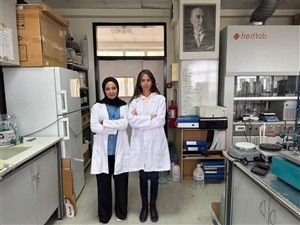
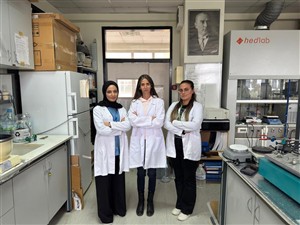
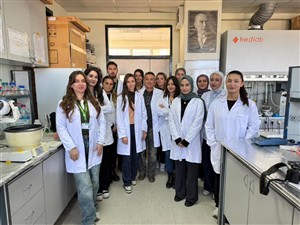
Memduh BİLMEZ BiyoNanoTeknoloji Araştırma Laboratuvarı


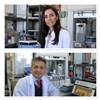
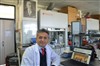
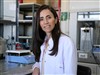
A project to be conducted by Prof. Dr. Melek Pamuk Algı, a faculty member in the Department of Chemistry at Aksaray University (ASÜ) Faculty of Science and Literature, and her research team, has been awarded funding under the TÜBİTAK 1002-A Rapid Support Program. The project aims to investigate various properties of a carbon dot-based nanomaterial developed using a plant-derived natural material. The study will explore the potential of this carbon dot-based nanomaterial, obtained by processing the plant-derived material using nanotechnological methods, particularly in therapeutic applications. Furthermore, a comprehensive preliminary assessment of the nanomaterial's biocompatibility and its potential for use in cancer treatment studies is planned.
The project will investigate the nanomaterial's anticancer effect.
Providing information about the project's objectives, Prof. Dr. Melek Pamuk Algı stated, “The plant-derived nanomaterial we will develop will exhibit an anticancer effect when activated by light. Therefore, it will not damage tissue properties. We also expect this naturally derived nanomaterial to be effective not only in the treatment of cancer cells but also in antimicrobial therapies.” Professor Pamuk Algı stated that the research team has successfully completed various TÜBİTAK projects such as 1002, 3501, and 1001, and has secured two national patents for Aksaray University. She added, “Undoubtedly, our graduate students have made a significant contribution to these successes. Recently, our undergraduate students have also joined our group and begun working with dedication. Cemre Işık, an undergraduate student in the Department of Molecular Biology and Genetics, who successfully completed preliminary trials, will serve as a scholarship recipient in this new project. I believe that our student Cemre will achieve excellent results from this work.” The data and results obtained from this study have the potential to be published in international journals, and it is also possible to patent the plant-derived nanomaterial as a multitherapy agent.
SOURCE LINK::https://www.aksaray.edu.tr/kanser-tedavisine-yonelik-dogal-kaynakli-nanomalzeme-projesine-tubitak-destegi